Today I’m handing over the writing reins to Laura from Thrifty Londoner, who’s turned her beautiful embroidery skills into a profitable side hustle. She’s kindly sharing her story, her best tips for getting started, and a run down of the platforms where you can sell your crafty creations…
I’m Laura and have called myself a small craft business owner for around 18 months now. When you hear about selling arts and crafts, often it can bring to mind twee village fayres, paper crafts and lumpy hand knitted socks- but that doesn’t have to be the case.
Shoppers are becoming more and more aware of the environmental and ethical impact of their spending habits – and are looking for alternatives to the high street to buy unique gifts, clothing, and homeware. This is where you can step in, if you have a hobby that you are passionate about, you could make some seriously desirable products that customers will come back to time and time again.
Only just last week I found myself looking on Etsy at alternatives to disposable cotton wool make up remover pads – someone has found a gap in the market, sewn up some reusable cotton pads, and is running a seriously successful online shop. That could be you!
My story
My craft story all started when I finally decided to pick up the embroidery hoop and thread I had bought months ago, and try my hand at some stitches. I loved how calming I found embroidery to be, and I finished a little embroidery patch on my t-shirt that very same evening.
I wore it to work the next day, and a couple of weeks later a colleague asked if I took commissions – it had never even crossed my mind that my embroidery would be something that people would pay for – but I said yes and soon figured out the details!
As soon as I opened my Etsy store I started an Instagram page to go with it, which turned out to be the best move I could have made. I soon started to see orders come through from Instagram, and the PR manager from The Maybourne Hotel Group (the people who own Claridge’s, The Connaught and The Berkeley hotels in Mayfair) got in touch with me about an embroidery commission. I was completely over the moon and have worked on two projects with them since – one of which was for an exclusive cocktail evening where one of the producers of Harry Potter was even in attendance. I thought my luck couldn’t get any better, until I saw that Home & Garden had featured an image of my embroidery too alongside a snippet about The Connaught hotel.
If I can start a successful craft business as a side hustle, anyone can! My best piece of advice is to start up an Instagram page at the same time as you set up shop. Here I have listed a few different websites that you might want to consider before you start up your craft business – some will be more suited to your craft than others and each offers slightly different set up costs and fees…
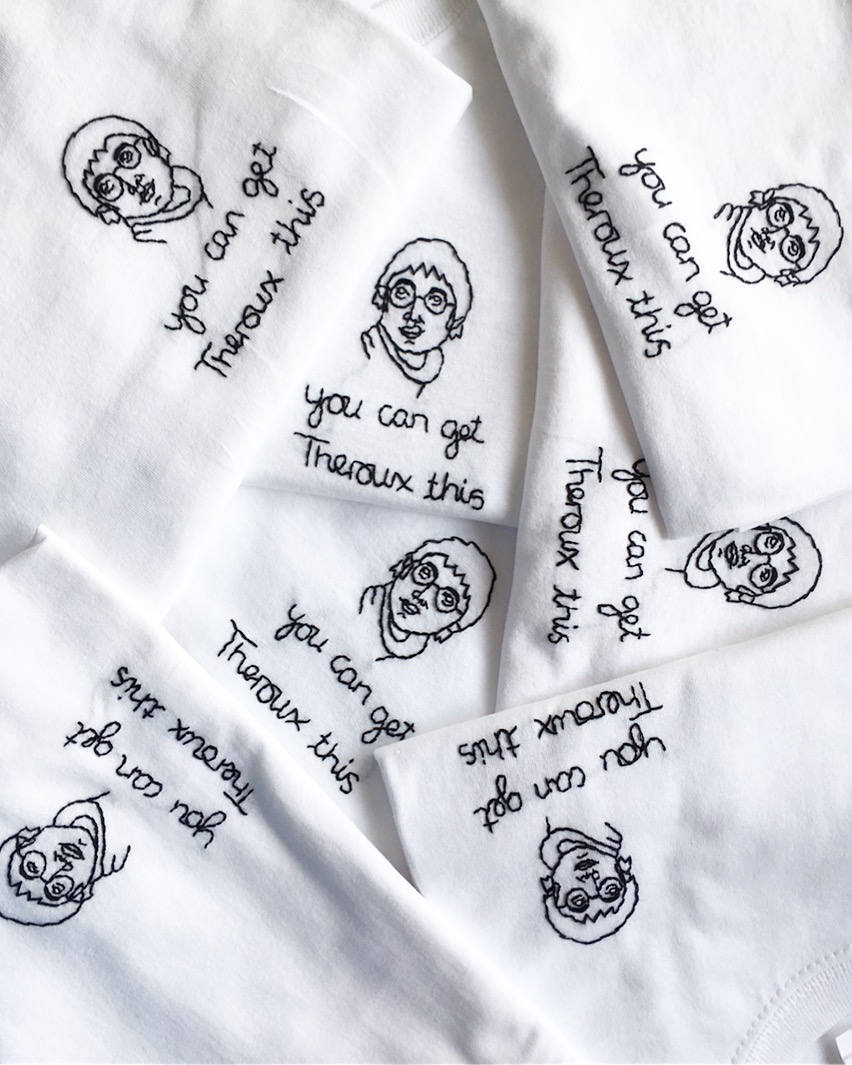
(Side note from Ruth: check out these amazing Louis Theroux tees available in Laura’s Etsy store!)
Where to sell your crafts
Etsy
Etsy is my online marketplace of choice, and with its low fees and access to buyers all over the world, it is a no brainer to open a store on Etsy. You can list an item for as little as US$0.20 (about 15p), it’s important to note that by listing one ‘item’ you can list as large a quantity as you want and still pay 15p for the listing. For example, if you were selling one t-shirt design, you could list it for 15p, and list a quantity of 20.
The selling fees are also relatively low, once an item is sold, there is a 3.5% transaction fee on the selling price. If you receive payment through Etsy Payments (the alternative is PayPal) there is also a 4% plus 20p payment processing fee when an item is sold.
The site allows you to customise your ‘shop’ with your name, logo and any message you would like to convey to potential customers. Etsy makes it so easy to start to build a brand using the prompts as you set up the store.
There is also a large community of Etsy crafters on Instagram- not to mention a huge amount of Instagram users who could be your next customers. Like I said earlier, Instagram really worked as a tool for me to drive traffic to my Etsy store- and I think the main reason for that is the large crafting community as well as the fact that the platform is extremely visual and lends itself to showing off beautiful product photos.
There is also a ton of support from Etsy on setting up your store, marketing your store, photography- pretty much everything you need to know is in their Seller Handbook. Not only can you find all the support you need here when you first start out, it’s also full of ideas about how to transition your Etsy store into a full time craft business.
Folksy
Folksy is all based around British crafting- everything sold on the site is created by hand (bar some of the craft materials) in the British Isles, so if your craft fits this niche, setting up shop with Folksy could be for you.
The Folksy community is strong and welcoming, and due to the focus on British crafting, there is not the same competition that you might find on other sites such as Etsy, and sellers are featured regularly on their home page.
There are no start up fees to create a store on Folksy, and a listing fee of just 15p- each listing will then be live for 120 days. When an item is sold, Folksy will charge a 6% selling fee.
Like Etsy, there is also a wealth of information available in their Folksy Knowledgebase for any questions you may have about setting up shop and managing your orders.
Not On The Highstreet
Not on the Highstreet is another popular option for crafters, but is a site that comes with heftier fees. Not only is there a £199 (not including VAT) start-up cost, but Not On The Highstreet will also charge a 25% selling fee for every item which is sold.
To sell on Not on the Highstreet, you must be a UK based craft business, and you have to apply to become a seller on the site. The set up process is a little lengthier, and this means that your application is reviewed before a decision is made as to whether your products are right for the site.
For me, I have never considered this platform due to the start-up cost and selling fees, however if you are making a large profit margin on your crafts, this could be a platform to investigate. After all, you would pay a whole lot more for bricks and mortar store!
Note from Ruth: I love Laura’s story, and how she’s managed to monetise her passion for crafting. I also love the fact that she went ahead and said yes to that first commission, and worked out the details along the way. If you fancy giving embroidery a go yourself, check out Laura’s guide to embroidering a personalised tee.

Great post! Really love Laura’s products on her shop, they’re so cute! x
Aren’t they amazing?!